
- See & Do
- Places to visit
- Museum
- Museum collection
Museum collection
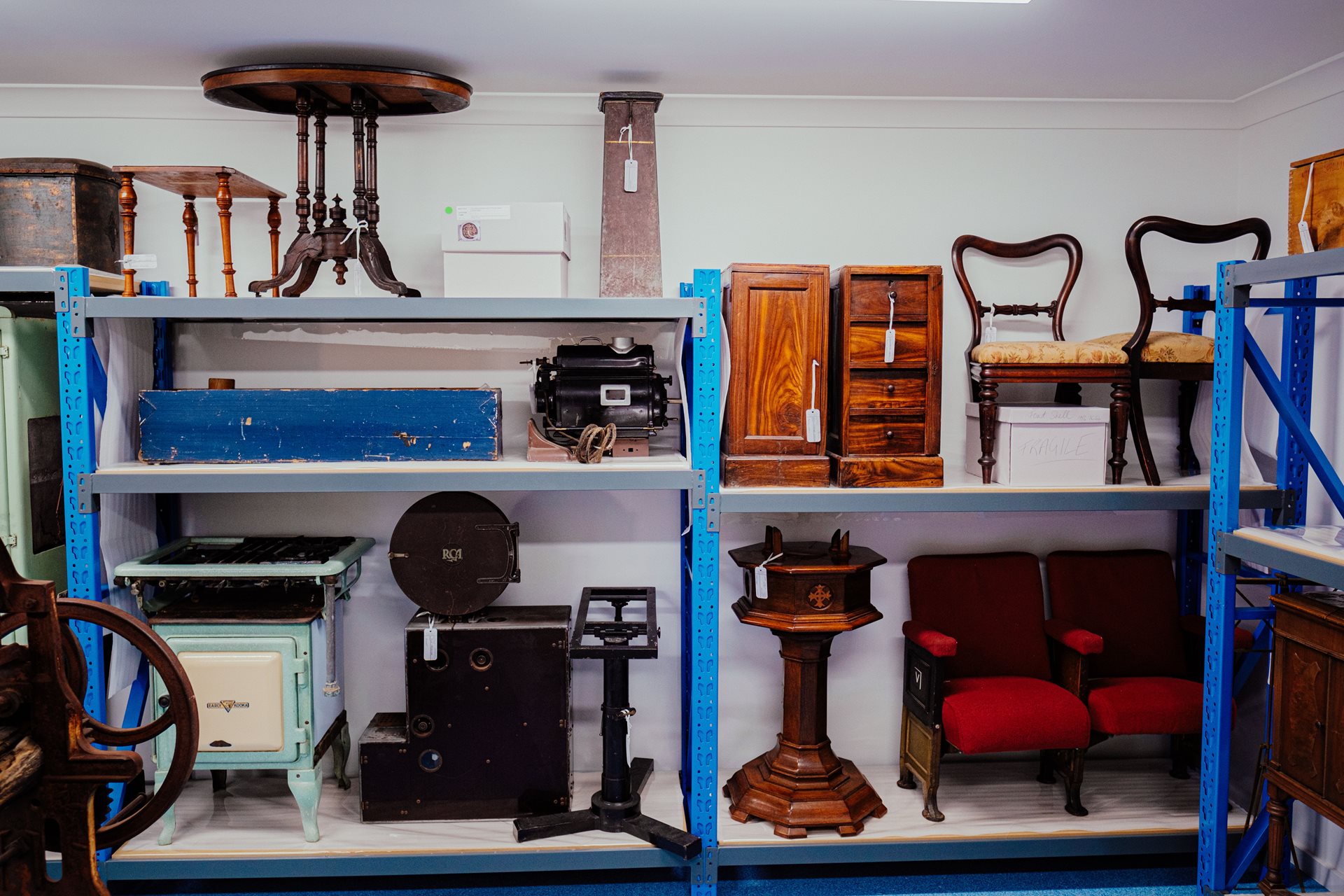
The Subiaco Museum collection comprises more than 15,000 items documenting the history of Subiaco and its community from the late nineteenth century to the present day. Approximately five per cent of the collection is on display at any one time, with the remainder carefully preserved in secure storage.
The collection has been built primarily through donations from current and former residents, families, businesses and community organisations, together with acquisitions by the City of Subiaco. It reflects all aspects of life in Subiaco, documenting the people, places and events that have shaped the suburb through material relating to homes and families, businesses and industry, education, sport, arts and culture, community organisations, transport, architecture, military service, civic life and the development of the City. From treasured family photographs and civic records to everyday household objects, each item contributes to preserving the history of Subiaco and its community.
The museum's collection comprises of donations from residents and former residents of Subiaco, as well as acquisitions by the City. Items in storage may be viewed by the public upon request. Item retrieval can take up to ten working days. Please see Fees and Charges for related costs.
Digital Collection
Subiaco Museum has an ever-growing digital collection available for research and viewing on the CollectionsWA website. The process of digitising, photographing and researching the collection is ongoing and this digital database will continually be updated with new objects and information.
More than 7,000 photographs and negatives dating from the 1890s to the present day record the changing face of Subiaco. Images document streets, homes, businesses, schools, sporting clubs, community events, local organisations and the everyday lives of residents, creating an invaluable visual record of the City's history.
The collection includes photographs dating from the 1890s to the present. The images are all closely related to the City of Subiaco. Photographs may be reproduced, subject to copyright conditions and a service charge. Complete and submit the Photograph Reproduction Form to order an image, see Fees and Charges for costs.
More than 3,500 objects illustrate everyday life in Subiaco, including household items, tools, toys, furniture, sporting memorabilia, business equipment, civic memorabilia, and objects associated with local organisations and industries.
Nearly 700 textile items, including clothing, uniforms, accessories and household textiles reflect the changing fashions, occupations and domestic life in Subiaco. It includes garments worn by local residents, items associated with schools, community organisations, and sporting clubs.
Over 4,000 archival records, including correspondence, diaries, certificates, maps, plans, posters, programmes, business records and ephemera, document the social and civic history of Subiaco.
The civic collection comprises objects, archival documents and photographs that document the evolution of local government from the Subiaco Roads Board, through the Municipality and Town of Subiaco, to today's City of Subiaco.
More than 180 recorded oral history interviews preserving the memories and experiences of residents, business owners and community members, provide a rich personal record of life in Subiaco. The recordings date back to 1983. These recordings are currently being digitised and uploaded to CollectionsWA.
The museum also manages a collection of approximately 200 historical and contemporary artworks. The collection includes paintings, prints, drawings, ceramics and sculpture by local and nationally recognised artists. It reflects the people, landscapes and stories of Subiaco and includes works by acclaimed Western Australian artist and illustrator Shaun Tan.
Shop the collection
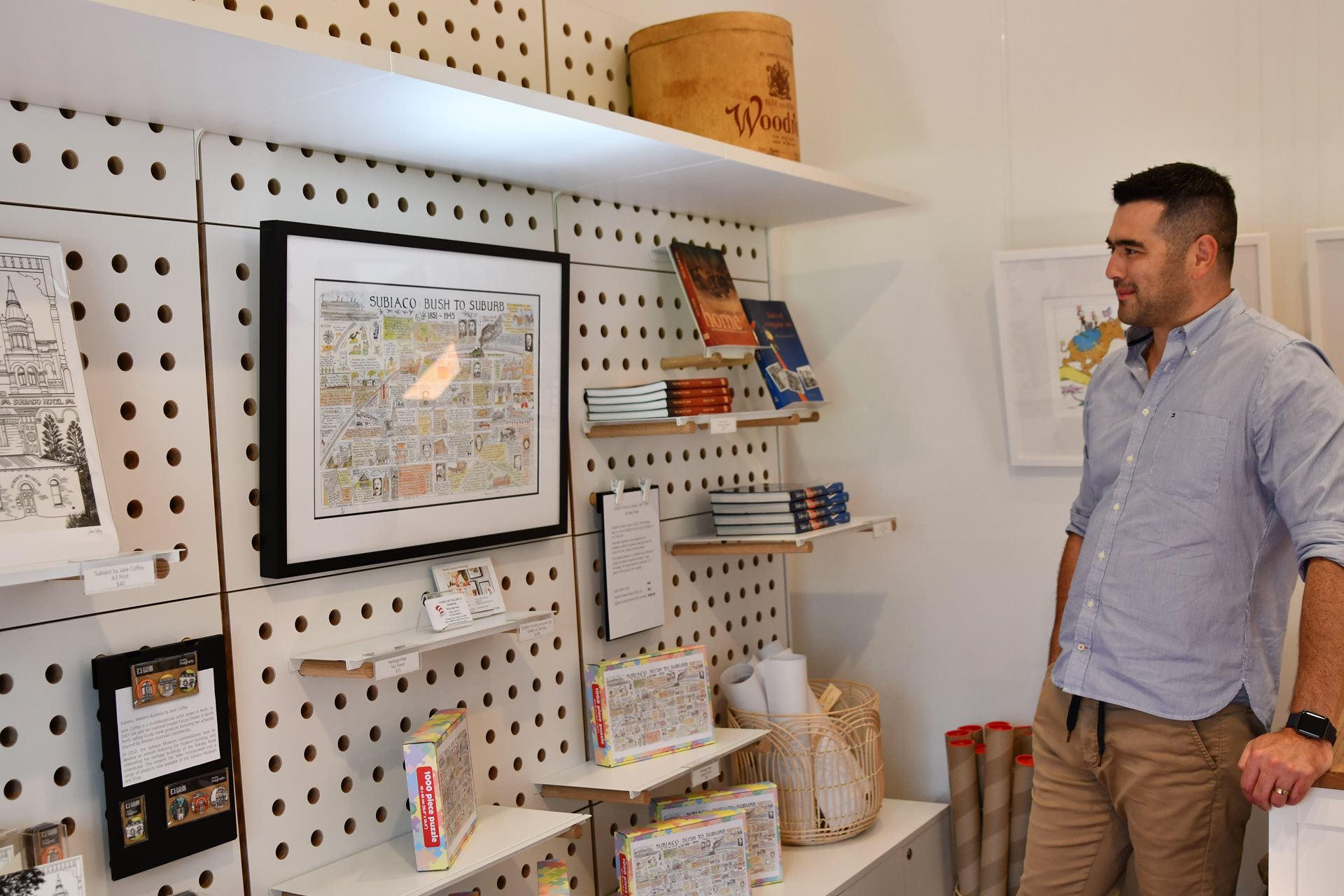
Take home a unique gift or souvenir from the Subiaco Museum Shop. Our carefully selected range celebrates the history and character of the museum and our community.
Browse our exclusive collection featuring bespoke designs by local artists. Mary Yate’s Heritage Map design is reproduced on prints and tea towels. Indigenous artists Buffie Shondell Corunna and Dana Garlett have created pieces using traditional symbols. Iconic Subiaco buildings are featured on a range of products locally designed and made by artist Jane Coffey. You’ll discover art prints, notebooks, cards, tote bags, magnets, wood blocks, lampshades, local history books, earrings and more.
Subiaco Museum Shop is open during the museum's regular opening hours.
Donation to the museum
If you are considering donating a photograph or an artefact you believe is significant in representing Subiaco’s rich history, please contact the Museum’s Coordinator and Curator via email at city@subiaco.wa.gov.au
Donations cannot be accepted without prior authorisation.
Donations meeting all the following criteria may be accepted:
the item is relevant to and consistent with the museum’s purpose of representing the natural and human history of the Subiaco area, which includes Subiaco, Jolimont, Daglish, Shenton Park and areas formerly in the boundaries including Crawley and Hollywood
the item is in a condition that contributes to the purpose of the museum
the museum has adequate resources to preserve, research, document, store, display and interpret the item
the item is not already represented in the museum’s collection
the item has a legal and ethical provenance.
If your donation is approved by the Subiaco Museum, it must be accompanied by a donor acknowledgement form giving full and unencumbered ownership to the museum, without restrictions on the use or future disposition of the item.
How do I donate to the Museum ?
Please contact the Curator via email at city@subiaco.wa.gov.au prior to your visit to discuss your proposed donations. Your email should include as much information as possible about the history and/or use of the item as well as images of the item.
Museum staff may need to further assess your object for suitability for our collection and will contact you if we need more information, or if the object is unsuitable for the collection. Proposed donations are reviewed in line with our collecting guidelines and collections needs.
Once the item/s are approved for acquisition, the Curator will arrange for you to complete the required documentation to transfer the ownership to the museum.
If you are interested in providing insight and information about the City of Subiaco and how life was in the past please complete the Personal Reminiscence Donor Form.
We will add your personal reminiscence to our Oral History collection and use the information to add detail to subjects and places in our research files.