Here are some frequently asked questions about FOGO that will help with what you need to know.
There are many environmental benefits associated with the FOGO waste system. These include:
Diverting food and garden organics from landfill, therefore reducing greenhouse gases,
Processing FOGO waste into nutrient-rich compost will help enrich the natural environment.
The State Government also requires all local goverments in Perth and Peel to move to a FOGO waste system by 2025. Read more at the Waste Authority WA website.
When the service begins, City of Subiaco residents will receive a new 240-litre lime green-lidded FOGO bin, allowing you to collect food and garden organics in one place. FOGO bins will replace the City's green waste bags.
Residents will also receive a small FOGO kitchen caddy and a supply of compostable caddy liners to help easily collect food scraps.
You can put food scraps and green waste in your new lime green-lidded FOGO bin.
This includes fruit and veg scraps, meat, seafood, bread, rice, dairy, prunings, leaves, and lawn clippings. Food items can be placed in your small FOGO kitchen caddy, with a compostable caddy liner, that can be tied up and placed in your 120/240-litre FOGO bin.
Read more about what goes in your FOGO bin.
The City of Subiaco increased waste charges by 6.5% for the 2022/23 financial year to accommodate the move to FOGO.
The 240-litre FOGO bin will belong to your property, not you. The FOGO bin can complement your compost bin or worm farm, as it can take the things that they can't - for example, meat, bones, dairy products and large prunings.
Best practice guidelines for introducing FOGO suggest a multi-stage process, whereby FOGO is implemented in single unit dwellings (e.g. houses) first, so learnings can be applied to mutli-unit dwellings (e.g. apartments).
The transition to FOGO for multi-unit dwellings will commence in February 2024.
No, green waste bags will no longer be sold or used for collecting green waste once FOGO is rolled out in Subiaco.
The City is currently developing a compassionate policy related to its FOGO waste service. This policy is still in progress, and will need to be approved by Council before it is shared with the public.
Local governments in WA are required under the State Government’s Waste Strategy 2030 to introduce a 3-bin FOGO system by 2025. The City will be rolling out 240L FOGO bins in accordance with this strategy, and with the State Government’s Better Bins program.
The 240L bin is appropriate size for most residents, given it will be collecting both green waste and other organic waste streams that used to go into the general waste bin. For this reason, once the roll out is complete and residents have had the opportunity to use the service there may be an opportunity to review their circumstances.
The City's bin collection days won't change, but the bins you put out for collection each week will change.
Your lime green-lidded FOGO bin will be collected weekly, and your red-lidded general waste bin and yellow-lidded recycling bin will be collected fortnightly on alternate weeks.
The City will provide plenty of notice as to when this change of bins put out each week will commence.
Read more about your bins and collection days.
No. The City has a tri-annual bulk green waste verge collections to help you recycle excess green waste.
Residents also receive a green waste pass, which can be used to drop off up to one cubic meter of bulk green waste at the Waste Metro Recycling Centre, located at the corner of Brockway Road and Lemnos Street, Shenton Park (entry via Brockway Road).
No, the general red-lidded wate bin will be collected fortnightly and the FOGO bin weekly.
Here are some tips to reduce odours:
Be sure to put your FOGO bin out every week, even if it's not full.
Don't overfill your compostable caddy bags, to prevent breakage. Tie them off tightly.
Wrap and place any odourous food scaps (like seafood or meat) into the freezer until bin collection day.
Layer newspaper or green waste at the bottom of your FOGO bin - this can help absorb liquids and prevent waste from sticking to the inside of the bin.
Keep your bins in the shade with the bin lids tightly closed.
Sprinkle baking soda, vinegar or lemon juice in the bin after its emptied to reduce odours.
If possible, allow lawn clippings and garden cuttings to dry out to prevent moisture build-up.
A FOGO kitchen caddy is a 7-litre bin designed to be used in your kitchen, on the counter, or in a cupboard. The caddy can be used to collect food scraps in the kitchen, such as food leftovers scraps (including bones), out of date food (without the packaging), tea leaves, and coffee grounds.
When you receive your 240-litre FOGO bin and kitchen caddy, you will also receive two rolls of compostable caddy liners.
Compostable liners can be placed inside your caddy. Every two to four days the caddy liner can be tied off and placed into your 240-litre FOGO bin.
Make sure you don't use plastic bags instead of compostable liners, as this can contaminate the compost.
Store your unusued compostable liners in a cool, dry place to avoid them breaking down.
No, you do not need to use compostable liners to line your kitchen caddy. You can use newspaper or put food scraps straight into the caddy.
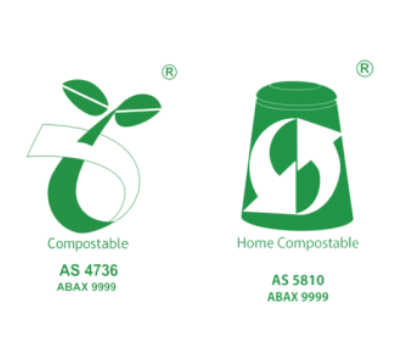
If you do use bags, they must be compostable and display the certified compostable symbol - NEVER put plastic bags or biodegradable bags into the FOGO bin.
From supermarkets or from Bunnings.
Ensure that you purchase liners or bags that display the certified compostable symbol.
The new three bin FOGO system will be the standard waste service provided to all City of Subiaco properties that do not share bins.
Local governments in WA are required under the State Government's Waste Strategy 2030 to introduce a three bin FOGO system by 2025.
Reducing the amount of waste that goes to landfill is a priority for the City of Subiaco.
Nappies should be placed in the red-lidded general waste bin. Emptying the contents of the nappy into the toilet and securing the nappy in a plastic bag will minimise odours. Scented rubbish bags can help. If possible, store bins in the shade and ensure the lid is closed.
Research has shown that nappies smell progressively worse for four days, then do not smell any worse (or better) after that. A waste bin containing nappies smells no worse after 14 days than after 7 days. If you are still concerned, odour neutralising products such as cat litter, crystals or bicarbonate of soda can be used in your bin. Modern cloth nappies are a great alternative.