
Signs shine spotlight on native plants
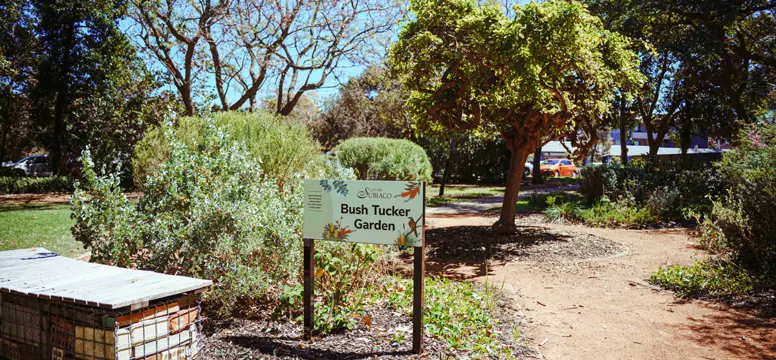
New interpretative signage in the bush tucker garden within Theatre Gardens, accessible via QR code, is helping the local community to discover the cultural significance and biodiversity benefits of native plants.
The interpretative information, provided by Karen Jacobs, Principal of Indigenous Economic Solutions Ltd, features traditional uses of the garden’s native plants, including for medicine, nutrition, and other cultural purposes.
The relationship between native plants and the changing seasons is also explored within the information; providing a deeper understanding of the important role they have played in Noongar culture and everyday practices for generations.
Some examples of native plants found within the garden, and their uses, include:
· Wild rosemary: Known for its strong aroma, the leaves are crushed and applied to the body to repel insects, and are used for smoking ceremonies. Can also be used as a savoury, grassy herb in cooking.
· Old man saltbush: Its leaves and roots are boiled in water to create a strong, nutrient-rich wash to bathe skin abrasions, burns, and sores. It has a natural, salty flavour, so can also be used as a direct salt substitute – its seeds are particularly tasty when ground up and roasted to make traditional damper.
· Creeping boobialla – Purplish-brown berries that possess a slightly sweet taste. Medicinal benefits are often used to help fight illness and improve immune system health.
Read the full list of native plant species found in the garden here.